




A stock research platform is a website or app that puts the information you need to study a company in one place: its financial numbers, charts, news, ratings and tools to compare it with other companies. You may also see the name investment research platform. It means the same thing, sometimes with funds and ETFs included as well as stocks.
A research platform helps you understand a company. It does not buy or sell anything for you. That is the job of a broker. This article explains what you find inside these platforms, the main types, and how to pick one that fits the way you invest. For our scored list, see Best stock research platforms.
Decide which market you invest in, what kind of help you want (raw data, ratings, valuation or charts) and how much you want to spend. Then try one or two platforms on a free plan or trial before you pay for a year. For example, Seeking Alpha Premium has a 7-day free trial for new subscribers, and Simply Wall St has a free plan.
What is inside a stock research platform
Most platforms are built from the same building blocks. They differ in which blocks they focus on and how deep each one goes.
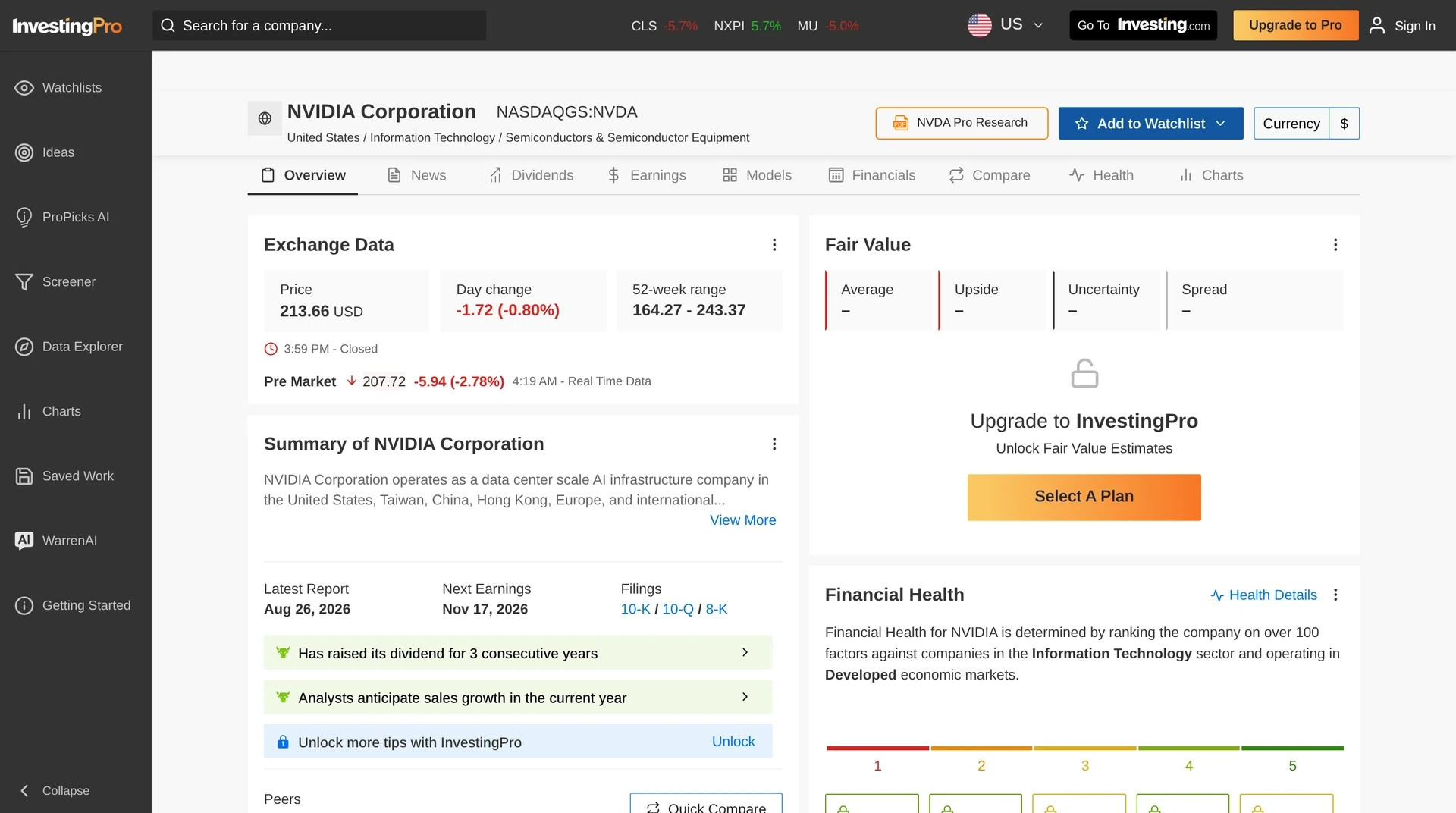
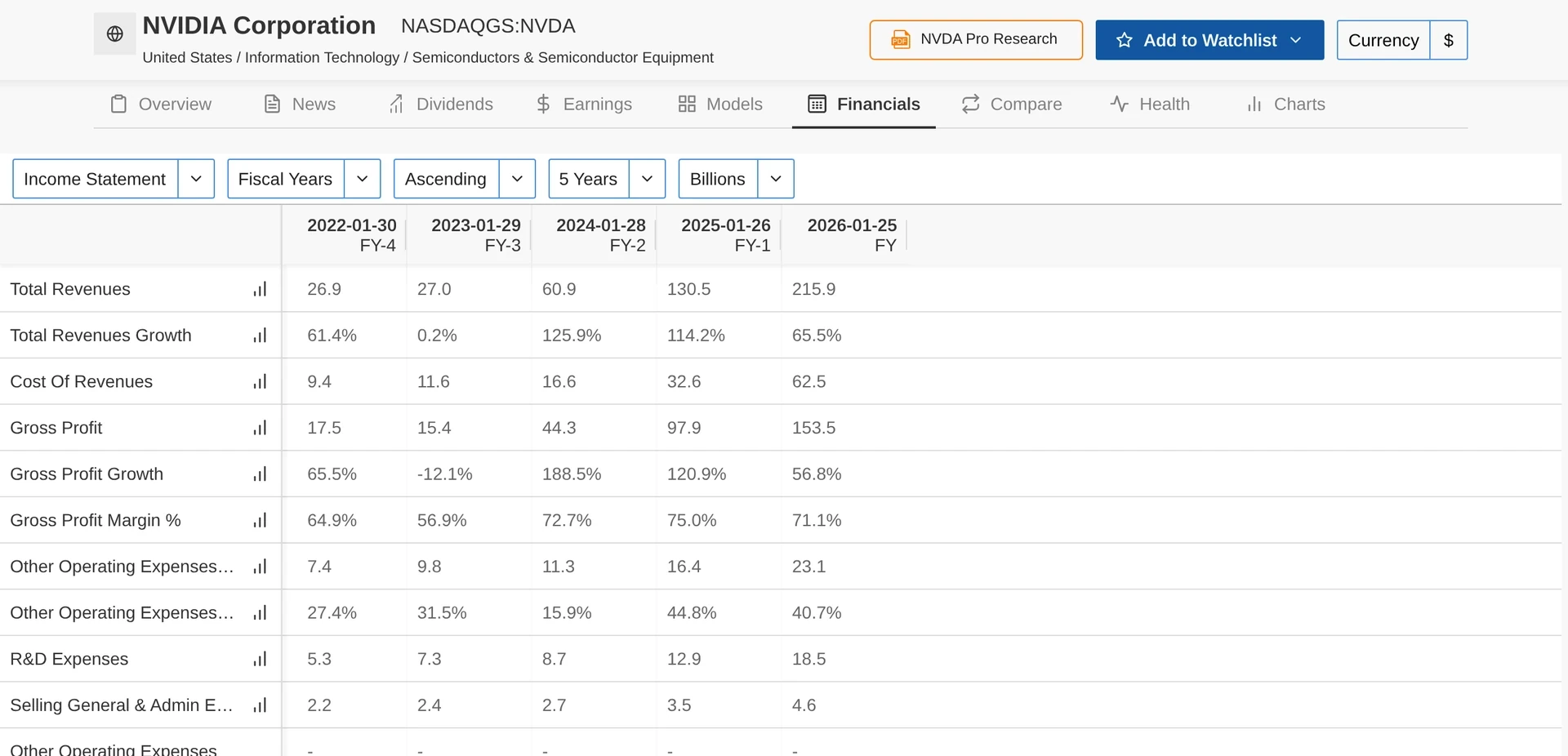
1. Company pages and financial statements
Each stock gets its own page with the price, key numbers and the company’s income statement, balance sheet and cash flow, usually over several years. How many years you get often depends on the plan. Koyfin’s free plan, for example, shows 2 years of financials, while its Plus plan shows 10.
2. A stock screener
A screener filters thousands of stocks down to a short list that matches your rules, such as size, sector or dividend yield. Our stock screener guide explains how screeners work and what the filters mean.
3. Charts
Price charts with indicators such as moving averages. Some platforms are mainly about charts, like TradingView; others have simpler charts next to the numbers.
4. Ratings and scores
Many platforms boil lots of data down into a grade or score. A few examples from official pages:
- Seeking Alpha Quant Ratings use financial statements, price performance and analyst estimates. Seeking Alpha says they cover about 5,600 stocks and update once a day.
- Morningstar star ratings compare the share price with Morningstar’s own fair value estimate, from 1 to 5 stars.
- TipRanks Smart Score is a 1 to 10 score built from eight factors, including analyst ratings, insider trades and news sentiment.
- Zacks Rank and Style Scores rank stocks; the Zacks #1 Rank List is the top 5% of stocks by Zacks Rank.
Scores are a quick summary, not a verdict. Each one is built in its own way, so read how it works before you rely on it. Where a platform shows past performance for its model, check whether those numbers are real or backtested. TipRanks, for example, notes that its Smart Score performance figures are backtested.
5. Fair value estimates
A fair value estimate is the platform’s view of what a share may be worth, usually from a model such as a discounted cash flow. InvestingPro shows a Fair Value on its Pro plan, Stock Rover calculates its own fair value and margin of safety, and Morningstar’s analysts publish fair values for the companies they cover. Different models can give very different answers for the same company. For how Morningstar’s analyst fair values compare with Seeking Alpha’s data-driven Quant Ratings, see Morningstar vs Seeking Alpha.
6. Analyst research and written analysis
Some platforms add written reports. Morningstar includes its own analysts’ reports; Seeking Alpha publishes articles from contributors and analysts next to its ratings; Zacks says its analysts cover more than 1,000 stocks in equity research reports.
7. Watchlists, portfolios and alerts
Most platforms let you follow stocks in a watchlist and get alerts on price moves, news or rating changes. Some can link to your broker account so your holdings update on their own; Simply Wall St and Stock Rover offer this, for example.
Research platform, broker app or stock picking service?
These three are easy to mix up:
| What it does | Example of what you get | |
|---|---|---|
| Research platform | Helps you study and compare companies | Financials, screener, charts, ratings, fair values |
| Broker or trading app | Holds your money and places your trades | Buying and selling, your account balance |
| Stock picking service | Sends you a list of stocks chosen by its team or model | Monthly picks and a model portfolio |
Some products mix these. Broker apps often have basic research, and some research platforms also sell picking services (for example Seeking Alpha’s Alpha Picks or InvestingPro’s ProPicks). Our stock pick services compared page puts them side by side. Picking services are model or team outputs, not personal advice, and past results do not tell you what will happen next.
The main types of platform
Platforms tend to lean one way. Knowing which way helps you shortlist.
- Ratings first: scores and grades that summarise a stock quickly. Examples: Seeking Alpha, TipRanks, Zacks, WallStreetZen.
- Valuation first: fair value estimates and financial health checks. Examples: InvestingPro, Morningstar, Simply Wall St, Stock Rover.
- Data first: lots of raw numbers, charts and screens, with few opinions. Examples: Koyfin, Stock Analysis.
- Charts first: price charts and technical tools. Example: TradingView. See also our best charting tools.
- Screener first: a fast way to filter the market. Example: Finviz. See also our best stock screeners.
How to choose one: a seven-point checklist
- Markets. Check that the platform covers the exchanges you invest in. Some focus on the US (Stock Rover covers the US and Canada; Seeking Alpha is strongest on US stocks), while InvestingPro lists data for the US and 70+ other markets and Simply Wall St says it covers 120,000+ stocks in 90+ markets.
- Your style. Long-term investors often value financial history and fair values. Active traders often care more about charts, real-time data and alerts.
- Depth of history. Do you need 2 years of numbers or 10 or more? This is often the biggest difference between free and paid plans.
- Free plan or trial. Seeking Alpha, Simply Wall St, Koyfin and Stock Rover have a free plan or free trial; Morningstar has a 7-day trial; InvestingPro lists neither on its pricing page. Try before you pay.
- Price and billing. Check whether the price is monthly or yearly only, and whether a first-year offer renews at a higher price. Seeking Alpha Premium, for example, is $269 for the first year and then $299 a year, according to its official page. Our price tracker lists current prices for every tool we cover.
- How ratings are built. Prefer platforms that explain their scores and say clearly when performance figures are backtested.
- Portfolio features. If you want your holdings to update on their own, check broker linking and which countries and brokers it supports. If tracking is the main job, a dedicated tracker such as getquin, Snowball or Sharesight may suit you better; see our best portfolio and dividend trackers.
A simple way to start
Pick one market and two platforms that lean different ways, for example one data-first and one ratings-first platform. Use their free plans or trials on the same few companies for a week. You will quickly see which one you open by habit. If you are still unsure, our Find my tool quiz suggests tools based on a few questions.
Frequently asked questions
Is a stock research platform the same as an investment research platform?
Mostly, yes. Both help you study investments. “Investment research platform” is sometimes used for tools that also cover funds, ETFs and other assets.
Do I need a paid platform?
Not to start. Free plans from Seeking Alpha, Simply Wall St, TradingView, Koyfin and Stock Analysis are enough to learn. Paid plans add depth, longer history, more screens and alerts.
Can a research platform tell me what to buy?
No. Ratings, fair values and picks are the platform’s model or opinion. They are general information, not personal advice, and they can be wrong.
Prices at a glance
Prices from each official pricing page. Prices can differ by region and may exclude tax.
Research, not advice. This article explains how tools work. It is general information, not a recommendation to buy or sell any investment, and not personal advice. Investing puts your capital at risk and you can get back less than you put in. Prices and plans change, so check the official site before you pay.
Some links on this page are affiliate links. If you subscribe through them we may earn a commission, at no extra cost to you. We score every tool on the same published criteria, using facts from official pages and our own testing. How we make money. This page is general information, not personal investment advice.
Read next
 ReviewSeeking Alpha reviewBest for reading analysis and ratings on US stocks in one place. Weak for non-US stocks.Read the review
 ReviewInvestingPro reviewStrong valuation tools across many markets. No free plan, and the first-year sale price renews higher.Read the review
 ArticleStock screener guide: how to use one, and which screeners to tryWhat a stock screener is, what the filters mean in plain English, how to build your first screen, and what the free and paid screeners we review offer.Read the article

 ArticleEarnings calendar tools compared (2026), free and paidEarnings calendar tools compared in plain English: free calendars from Yahoo Finance, Nasdaq and Earnings Whispers, plus Seeking Alpha, TradingView and Fiscal.ai, with prices.Read the article